

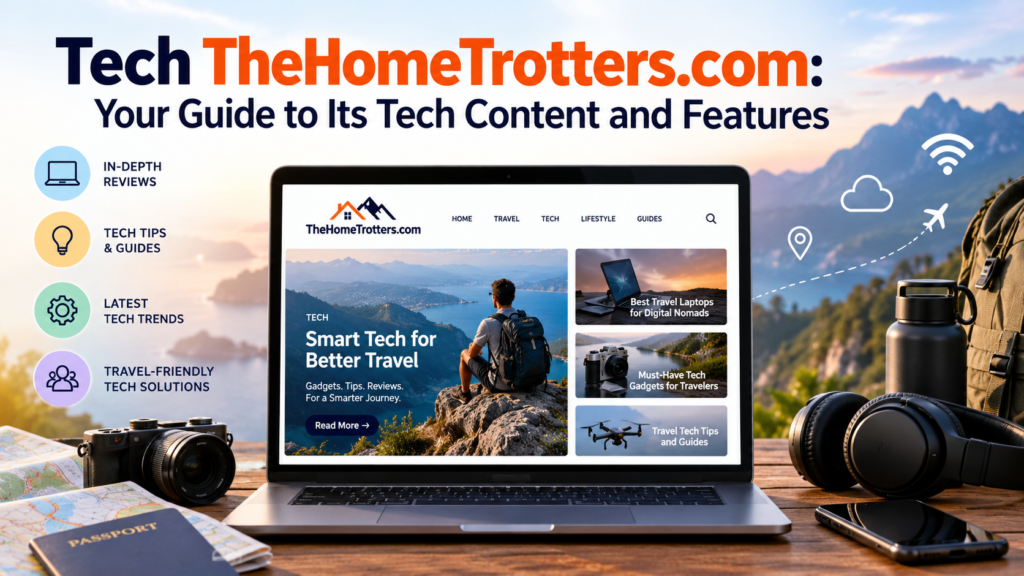
Tech thehometrotters .com is a search phrase associated with the technology content on TheHomeTrotters.com, a broader home and lifestyle website. Its verified technology coverage includes a Home Friendly Tech category and articles about connected devices, smart-home compatibility, security, and everyday home automation. It is best approached as a source of reading material and ideas, rather than assumed to be a standalone technology product or service.
For readers wondering what the website offers, the most useful starting point is its actual articles. This guide explains the topics you can find, the browsing features visible on the site, and how to assess its advice before applying it to your home.
What Is Tech TheHomeTrotters .com?
TheHomeTrotters.com presents itself primarily around home repairs, interior design, and decorating ideas. Its navigation includes home décor, home safety and security, and interior design. Technology forms part of that wider editorial mix.
The phrase “tech thehometrotters .com” also appears in article titles and search results. However, the spaces in the phrase do not represent a separate web address. The website examined here is thehometrotters.com.
That distinction matters because searches return several similarly named domains. A similar name does not establish shared ownership or an official connection. Check the address carefully when following a result, particularly if you intend to contact the publisher or use a service.
A Quick Overview
| Question | What the reviewed pages show |
|---|---|
| What kind of website is it? | A broad home and lifestyle publication |
| Does it publish technology content? | Yes, including a Home Friendly Tech category |
| What is its clearest technology focus? | Connected homes and household technology |
| What browsing features are visible? | Search field, category archives, article links, and navigation |
| Is this guide a hardware test? | No; it reviews the website’s accessible content |
What Technology Content Can You Find?
The site’s technology material covers several practical questions that arise when researching a connected home.
Smart-Home Planning and Connected Devices
A broad connected-home guide discusses sensors, cameras, locks, hubs, and network setup. It connects these subjects with household priorities such as comfort, convenience, and managing everyday routines.
This makes the content potentially useful for readers still defining their needs. Before comparing individual products, it helps to identify the problem you want to solve: monitoring an entrance, improving lighting control, or making household settings easier to manage. The site provides introductory material around these types of decisions.
Device Compatibility
TheHomeTrotters also publishes a dedicated article about smart-home compatibility. It discusses wireless protocols, hub requirements, network issues, and differences between device ecosystems.
For a reader, the useful takeaway is to turn broad advice into specific questions:
- Does this exact model support my existing system?
- Is an additional hub or bridge required?
- Which features work through my preferred app?
- Where can I find the manufacturer’s compatibility list?
An introductory article can help you understand what to ask. The product’s current documentation should settle whether a particular combination will work.
Video Doorbells and Home Security
The site’s video-doorbell guide covers image quality, viewing angle, power options, storage, mounting, and privacy considerations. Its structure goes beyond a simple list of product names by organizing the subject around buying criteria.
That approach can help readers prepare a shortlist. For example, someone researching a doorbell could create separate notes for installation requirements, recording options, and ongoing charges instead of choosing solely from a headline specification.
The article remains a starting point for research. Its general guidance should be checked against the exact model and installation location.
Privacy and Household Technology
A separate article addresses smart-home privacy settings, while the broader technology guide discusses account protection, updates, and data collection. Privacy is therefore an identifiable part of the site’s technology coverage.
When reading this material, consider what information you still need from the device provider. Questions about recordings, account access, deletion options, and support periods deserve clear answers before a purchase.
Which Website Features Help Readers?
The visible features are largely those of an article-based publication.
Category Archives
The Home Friendly Tech archive groups technology-related posts together. Article listings display titles, author names, and estimated reading times. This provides a more focused entry point than browsing the entire homepage.
Search and Navigation
A search field appears on the reviewed pages, alongside navigation to the website’s main home-related sections. These are useful starting points for locating a subject, although the presence of a search box alone does not establish how complete or accurate its results are.
Tables of Contents and Related Reading
The reviewed technology guides include tables of contents and links to related articles. For example, the compatibility guide points readers toward broader connected-home material and additional planning topics.
This structure lets readers move from an overview to a narrower question without treating each article as an isolated resource.
These visible editorial features should not be confused with an independently verified app, device-control dashboard, or installation service.
How Reliable Is Its Technology Advice?
Reliability is best assessed article by article.
The reviewed pages demonstrate that technology content exists and identify the subjects covered. They do not, by themselves, independently establish the accuracy of every statistic, anecdote, or performance claim.
For example, the connected-home guide includes energy-saving estimates, while the doorbell article describes a numerical reduction in package theft. The relevant passages do not clearly identify enough underlying research to verify those figures from the statements alone. Treat them as claims requiring further evidence, rather than guaranteed results.
What to Look for in a Useful Review
Before relying on any technology article, ask whether it provides:
- The exact product name and model.
- A publication or update date.
- Links to original documentation.
- An explanation of how testing was performed.
- Specific limitations and drawbacks.
- Clear disclosure of commercial relationships.
An author name or a “hands-on” headline is not a substitute for a documented testing method. Equally, an introductory guide can still be useful without being a laboratory review, provided its scope is clear.
How to Use the Content Effectively
A focused reading process can turn general inspiration into a useful research checklist.
1. Begin With One Household Question
Choose a clear objective, such as understanding doorbell recording options or finding out why two devices may be incompatible.
A specific question makes it easier to judge whether an article has answered your needs.
2. Record the Unanswered Details
As you read, note anything that remains unclear:
| Research area | Question to resolve |
|---|---|
| Compatibility | Does the exact model work with my setup? |
| Cost | What additional equipment or subscriptions are required? |
| Installation | What preparation does the manufacturer specify? |
| Support | How long will the product receive updates? |
| Daily use | Can everyone in the household operate it comfortably? |
This is a research framework, not a claim that every article on the site answers each question.
3. Verify Before Acting
Use the manufacturer’s current product page, installation guide, and support documentation to confirm model-specific details.
If an article includes a precise saving, performance improvement, or security outcome, look for its original evidence. If that evidence is unavailable, leave the claim out of your decision.
Is It Useful for International Readers?
The subject matter can interest readers worldwide, but location-specific examples need context. The connected-home guide, for instance, includes dollar-based savings estimates explicitly framed around a U.S. household. Those figures should not be applied automatically to another country.
International readers should check local availability, regional product versions, installation requirements, warranty coverage, and service pricing.
The most transferable value is often the set of questions an article raises. A useful buying question can travel across markets; a quoted price or household savings estimate may not.
Conclusion
Tech thehometrotters .com leads readers toward technology content within a broader home-focused publication. Its connected-home guides offer subjects worth exploring, including compatibility, security devices, planning, and privacy. Use those articles to build your understanding and refine your questions. For purchase decisions or installation steps, confirm the details through current product documentation and traceable evidence.
You may also read