A Math Play Zone is a learning environment where mathematics is taught through games, puzzles, challenges, interactive activities, and hands-on experiences rather than relying only on traditional worksheets and lectures. The idea is simple: when learners can play with numbers, patterns, shapes, logic, and problems, mathematics can feel less intimidating and more interesting.
The phrase “Math Play Zone” can describe different educational experiences rather than one single universal platform. For example, a Math Play Zone developed at the Nowon Math Culture Center in South Korea includes interactive activities involving fractions, multiplication, size comparison, numerical patterns, spatial perception, data, and puzzles.
For parents, teachers, and students around the world, the concept offers an appealing approach to mathematics: learn by doing, experiment without fear, and develop problem-solving skills through enjoyable challenges.
What Is a Math Play Zone?
A Math Play Zone is essentially a space physical, digital, or a combination of both designed to turn mathematical concepts into interactive experiences.
Instead of simply asking a student to solve 20 equations on paper, a Math Play Zone might present the same underlying concept through:
- Number games
- Mathematical puzzles
- Matching challenges
- Logic activities
- Shape and geometry games
- Pattern-recognition exercises
- Counting activities
- Measurement challenges
- Strategy games
- Interactive problem-solving tasks
This approach can be particularly useful for younger learners because it gives them something concrete to explore.
The goal is not to make every mathematics lesson into entertainment. Rather, the purpose is to use play as a pathway toward mathematical thinking.
Why Is Math Play Important?
Many students struggle with mathematics because they associate it with mistakes, difficult homework, tests, or pressure to produce the correct answer quickly.
A playful learning environment can change that experience.
When students encounter mathematics through a game or challenge, they can experiment with different solutions. A wrong answer becomes part of the process instead of feeling like a failure.
This can encourage several valuable learning behaviors:
- Curiosity – Students want to discover what happens next.
- Persistence – Challenging puzzles encourage learners to try again.
- Logical thinking – Games often require players to identify relationships and patterns.
- Confidence – Successfully completing small challenges can make difficult concepts feel manageable.
- Active participation – Learners interact with the concept instead of passively reading about it.
Research and educational practice increasingly emphasize the value of meaningful engagement rather than treating mathematics as memorization alone.
Key Activities You Can Find in a Math Play Zone
The exact activities vary depending on the age group and learning environment, but several categories work particularly well.
Number and Counting Games
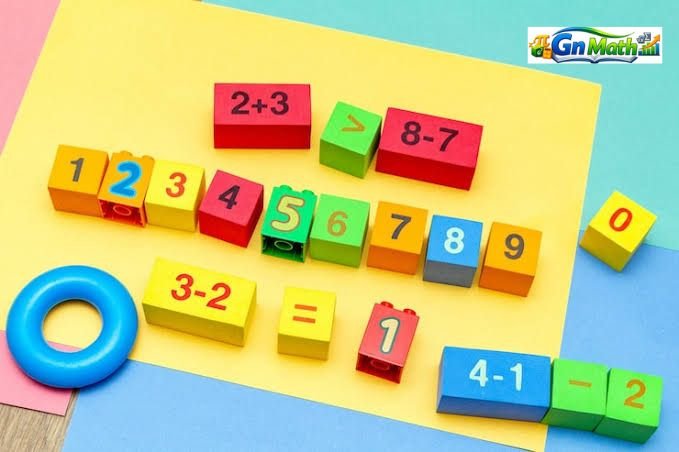
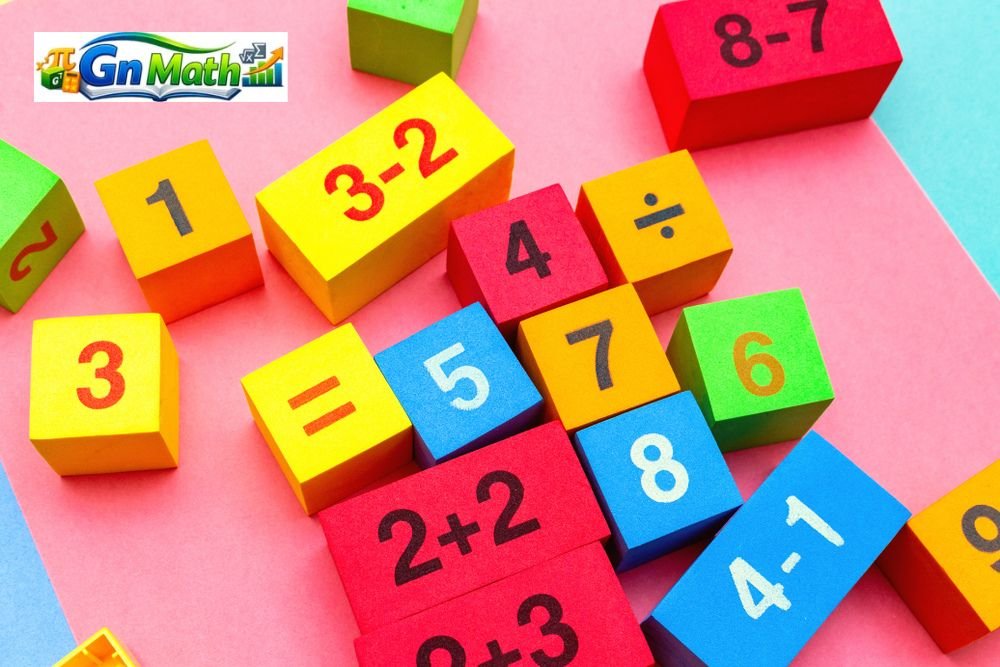
For beginners, numbers should be something learners can see, move, compare, and manipulate.
Counting games can introduce concepts such as:
- Number recognition
- Counting sequences
- Greater than and less than
- Addition
- Subtraction
- Number comparison
A simple game involving cards, dice, counters, or digital objects can turn basic arithmetic into an active challenge.
Logic and Puzzle Challenges
Logic puzzles are another important part of a Math Play Zone.
A learner might need to identify a missing number, complete a sequence, find a pattern, or determine which object does not belong.
These activities encourage students to ask:
“What information do I already have, and what can I infer from it?”
That type of thinking is valuable far beyond mathematics.
Geometry and Shape Activities
Geometry becomes easier to understand when students can interact with shapes.
A Math Play Zone may include activities involving:
- Triangles
- Squares
- Rectangles
- Circles
- Angles
- Symmetry
- Area
- Volume
- Three-dimensional objects
Interactive geometry activities can help learners develop spatial awareness because they are not simply looking at diagrams in a textbook—they are actively exploring relationships between shapes.
Pattern Recognition
Patterns are fundamental to mathematical thinking.
Students can identify patterns in:
- Numbers
- Shapes
- Colors
- Sequences
- Objects
- Visual designs
For example, completing a sequence such as 2, 4, 6, 8, ? introduces a basic numerical relationship. More advanced activities can require learners to recognize increasingly complicated rules.
Strategy Games
Strategy games add another dimension to mathematical learning.
A player may need to calculate risk, predict an opponent’s move, manage limited resources, or determine the most efficient solution.
These experiences can develop planning and reasoning skills while keeping students engaged.
Math Play Zone for Different Age Groups
A successful Math Play Zone should match activities to the learner’s developmental level.
Preschool and Kindergarten
Young children benefit from activities involving:
- Counting
- Sorting
- Matching
- Shapes
- Simple patterns
- Number recognition
- Basic comparisons
The emphasis should be on exploration rather than complicated calculations.
Elementary School Students
Older children can move toward:
- Addition and subtraction
- Multiplication and division
- Fractions
- Measurement
- Geometry
- Word problems
- Logic puzzles
- Mathematical sequences
At this stage, games can reinforce classroom concepts while giving students additional practice.
Middle School Learners
A Math Play Zone can also support more advanced mathematics through:
- Algebra puzzles
- Coordinate geometry
- Ratios
- Percentages
- Probability
- Data interpretation
- Spatial reasoning
- Multi-step challenges
The important point is that the activity should remain intellectually meaningful. A colorful interface alone does not make an activity educational.
Benefits of Using a Math Play Zone
1. Makes Mathematics More Approachable
The biggest advantage is often psychological. Students who find traditional mathematics intimidating may be more willing to participate when the activity feels like a challenge rather than a test.
2. Encourages Problem-Solving
Good mathematical games require learners to think before acting. They must evaluate information, test ideas, and adjust their strategy.
3. Provides Immediate Feedback
Interactive activities can tell learners whether their answer or strategy worked. This allows students to correct mistakes while the problem is still fresh.
4. Supports Different Learning Styles
Some learners understand mathematical ideas more easily when they can visualize or manipulate objects. Interactive activities can provide an alternative to purely text-based instruction.
5. Encourages Collaboration
A Math Play Zone does not have to be an individual experience. Parents, teachers, siblings, and classmates can solve challenges together.
Collaborative play can encourage students to explain their thinking, listen to other approaches, and compare solutions.
How Parents Can Create a Math Play Zone at Home
You do not need an expensive classroom or sophisticated technology to create one.
A small table, a few basic materials, and regular practice can be enough.
Simple Materials to Use
Consider keeping the following items available:
- Playing cards
- Dice
- Building blocks
- Measuring tape
- Coins
- Paper and pencils
- Number cards
- Puzzles
- Board games
- Tangrams
- Everyday household objects
A parent can turn ordinary activities into mathematical challenges.
For example, while cooking, children can measure ingredients. While shopping, they can compare prices. While arranging toys, they can sort objects by size, shape, or color.
This shows children that mathematics is not restricted to a classroom.
Digital Math Play Zones
Technology has made it possible to create virtual math environments where students can interact with mathematical concepts through a web browser or educational application.
Digital math games can be useful because they often provide:
- Immediate responses
- Visual demonstrations
- Different difficulty levels
- Short practice sessions
- Interactive puzzles
- Progress tracking
However, parents and teachers should evaluate digital resources carefully. A game being entertaining does not automatically mean it provides strong educational value.
A useful digital math activity should require genuine thinking rather than simply encouraging repetitive clicking.
Math Play Zone vs. Traditional Worksheets
Traditional worksheets still have an important role in education. They can provide structured practice and help teachers assess whether students can work independently.
However, worksheets and playful learning serve different purposes.
| Math Play Zone | Traditional Worksheet |
|---|---|
| Interactive | Mostly paper-based |
| Encourages exploration | Provides structured exercises |
| Often immediate feedback | Feedback may come later |
| Can encourage collaboration | Usually individual |
| Strong for engagement | Strong for written practice |
| Can introduce concepts visually | Useful for recording calculations |
The best approach is not necessarily to choose one over the other.
A balanced learning routine can combine instruction, hands-on activities, games, discussion, and written practice.
How Teachers Can Use a Math Play Zone
Teachers can introduce Math Play Zone activities during several parts of the school day.
Math Stations
A classroom can be divided into stations. One group might work with the teacher while another completes a mathematical puzzle or game.
Warm-Up Activities
A five-minute number challenge at the beginning of a lesson can activate students’ mathematical thinking.
Revision Sessions
Games can be particularly useful before assessments because they allow students to revisit familiar concepts in a less stressful format.
Group Challenges
Students can work in teams to solve a problem and explain how they reached their answer.
The focus should remain on mathematical reasoning rather than simply identifying the fastest student.
Building a Better Math Play Zone
The most effective environment is not necessarily the one with the most games. Quality matters more than quantity.
A strong Math Play Zone should provide:
- Clear learning objectives
- Age-appropriate challenges
- Increasing levels of difficulty
- Opportunities to make mistakes
- Useful feedback
- Different types of activities
- Opportunities for explanation and discussion
- A healthy balance between play and instruction
Teachers and parents should also observe whether students are actually improving.
As one recent discussion of math-game platforms notes, engagement alone is not proof of mastery; learners still benefit from activities such as short exercises, teacher observation, and real-world problems to check understanding.
Is Math Play Zone Suitable for Everyone?
Yes, but the activities need to be adapted.
A preschool child should not receive the same challenge as a middle school student. Similarly, a learner who already understands multiplication needs a different level of activity from someone who is still developing basic number sense.
The strongest Math Play Zone experiences are flexible enough to accommodate different abilities.
The objective should not be to make mathematics easier by removing all difficulty. Instead, it should make difficulty interesting and manageable.
Frequently Asked Questions
What is Math Play Zone?
Math Play Zone is a concept for making mathematics interactive through games, puzzles, challenges, hands-on activities, and digital learning experiences. It can refer to a physical educational space or an online collection of mathematical activities.
Is Math Play Zone only for young children?
No. While play-based mathematics is especially useful for younger learners, older students can participate in algebra, geometry, probability, logic, data, and strategy-based challenges.
Can Math Play Zone help children learn mathematics?
Yes. Well-designed mathematical games can provide opportunities to practice concepts, recognize patterns, solve problems, and develop logical thinking. They work best as a supplement to broader instruction rather than as a complete replacement for teaching.
Conclusion
A Math Play Zone transforms mathematics from something students simply have to complete into something they can actively explore. Through puzzles, number games, geometry activities, patterns, strategy challenges, and hands-on experiences, learners can practice important mathematical skills while developing curiosity and confidence.
The concept works best when play and education support each other. Games should not replace teachers, meaningful practice, or real mathematical discussion. Instead, they should create additional opportunities for learners to experiment, make mistakes, solve problems, and discover how mathematics works. Whether it is a classroom station, a dedicated educational center, a family activity area, or a digital learning environment, a well-designed Math Play Zone can make mathematics more approachable and memorable.
You may also read