
A laptop charger is one of those things I rarely think about when everything is working properly. It becomes important the moment the battery starts running low and the charger is missing, damaged, or sitting in another room. For people who use their laptop throughout the day, having a reliable charging setup can make work much less frustrating.
Finding the right lenovo laptop charger is only part of the solution. Where and how you charge the laptop matters too. A good setup can keep cables organized, make multiple devices easier to manage, and reduce the need to search for an available outlet every few hours.
Problem With a Single Outlet
Think about a typical desk for a moment. There may be a laptop, phone, wireless earbuds, monitor, desk lamp, keyboard, mouse, and perhaps a tablet nearby. Almost every modern device needs power at some point. Now imagine trying to charge everything from one or two outlets.
This is where a charging station can become useful. Instead of having several individual adapters spread across the desk, a dedicated area for charging can make the whole setup easier to manage. It doesn’t have to be an expensive or complicated arrangement. Even a small section of your desk with the necessary charging equipment can work well.
First, Check the Laptop Model
One mistake worth avoiding is buying a charger simply because it is labeled for Lenovo laptops. Lenovo produces many different laptop models, and their charging requirements can vary. Before replacing a charger, check the exact model of your computer and compare the required specifications with the charger you are considering. Look at details such as:
- Required voltage
- Power or wattage
- Connector type
- USB-C compatibility, if applicable
- The specifications printed on the original adapter
If the original charger is still available, its label can provide useful information. Your laptop’s documentation or manufacturer support information can also help confirm what it needs.
This small amount of checking can prevent an otherwise avoidable purchase mistake.
Think About Where You Actually Work
The ideal charging setup for a home office may not be the same as one for a shared workspace. If your laptop stays on one desk most of the day, keeping the charger there makes sense. You don’t need to repeatedly pack it into your bag and unpack it again. If you move between rooms, classrooms, offices, or coffee shops, portability becomes more important. In that situation, a smaller charger and a carefully chosen cable can make your daily routine easier.
I find it helpful to separate my charging needs into two categories: fixed charging and mobile charging. Fixed charging is for the place where you regularly work. Mobile charging is what you take with you. Once you think about them separately, choosing accessories becomes much easier.
What Makes a Charging Station Useful?
A charging station isn’t simply a place where several cables are plugged in. Its real value is organization. A practical setup might include a power source, space for commonly used devices, and enough room to prevent cables from becoming tangled. Some people prefer keeping their phone and earbuds beside the laptop, while others want a separate charging area away from the main workspace.
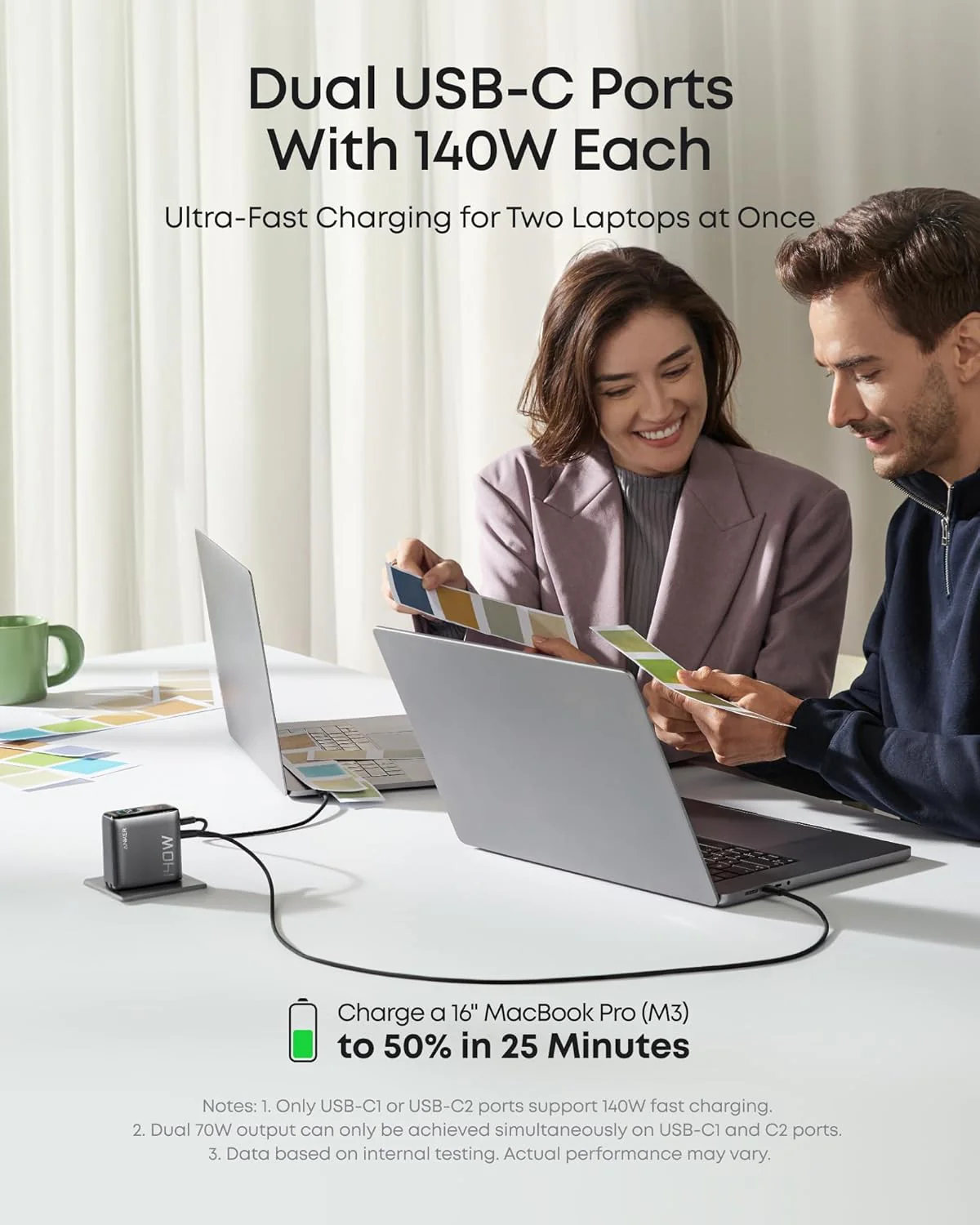
The best arrangement depends on the devices you own. If you regularly charge several USB-powered devices, having multiple charging ports can reduce the number of adapters on your desk. However, don’t assume every multi-port charger can deliver its maximum advertised output to every connected device at the same time. Check how its power is distributed.
Keep the Laptop Cable Within Reach
Cable placement sounds like a minor detail, but it can have a surprisingly large effect on how comfortable your workspace feels. A charger that barely reaches the laptop forces you to position the computer awkwardly. A cable that is unnecessarily long, meanwhile, can create clutter.
Try routing the cable along the back or side of the desk rather than letting it run directly across your workspace. Cable clips or simple organizers can help keep it in place. The goal isn’t to make the desk look perfect. It is simply to keep the charging cable from becoming something you constantly have to work around.
Don’t Forget About Heat
Charging equipment should have enough airflow around it. Avoid placing power adapters underneath piles of paperwork, inside tightly enclosed drawers while operating, or against materials that can trap heat. If several devices are charging simultaneously, the area may become warmer than expected.
The laptop itself also benefits from good ventilation. Keep its cooling vents clear, particularly when you’re performing demanding tasks while connected to power. If an adapter, cable, or connector becomes unusually hot, smells strange, makes unusual noises, or shows visible damage, stop using it and investigate the problem rather than assuming it is normal.
Make Your Setup Travel-Friendly
A well-organized desk is helpful, but your charging system should also work when you leave home. If you travel regularly, consider keeping a small charging pouch containing the essentials. Instead of collecting cables from different drawers before every trip, you can have the basics ready to go.
For longer journeys, a portable battery may also be useful if it is compatible with your laptop’s charging requirements. However, laptop charging can demand considerably more power than charging a phone, so compatibility and output should be checked carefully. For everyday use at home or in the office, a charging station can also help keep multiple devices organized and powered without relying on several separate adapters. This is another reason not to buy accessories based only on appearance or capacity numbers.

A Simple Setup Can Be Enough
You don’t need a desk full of technology to create an effective charging routine. For many people, a dependable laptop charger, a suitable multi-device power source, a few well-organized cables, and a convenient place to charge everything are enough.
The more devices you add, the more important it becomes to understand how power is distributed. Keeping unnecessary adapters and cables out of the setup can actually make it easier to maintain. I would rather have a simple charging area that I can understand at a glance than a complicated collection of accessories that creates more problems than it solves.
Conclusion
Choosing a lenovo laptop charger should begin with compatibility, but it shouldn’t end there. The way you arrange your charging equipment can have just as much impact on your everyday experience. A thoughtfully planned charging station can reduce cable clutter, keep frequently used devices together, and make it easier to maintain a consistent routine. At the same time, separating your home setup from your travel needs can prevent you from constantly moving the same charger around. The best charging arrangement isn’t necessarily the one with the most ports or accessories. It is the one that gives you reliable power without making your workspace unnecessarily complicated.
You may also read