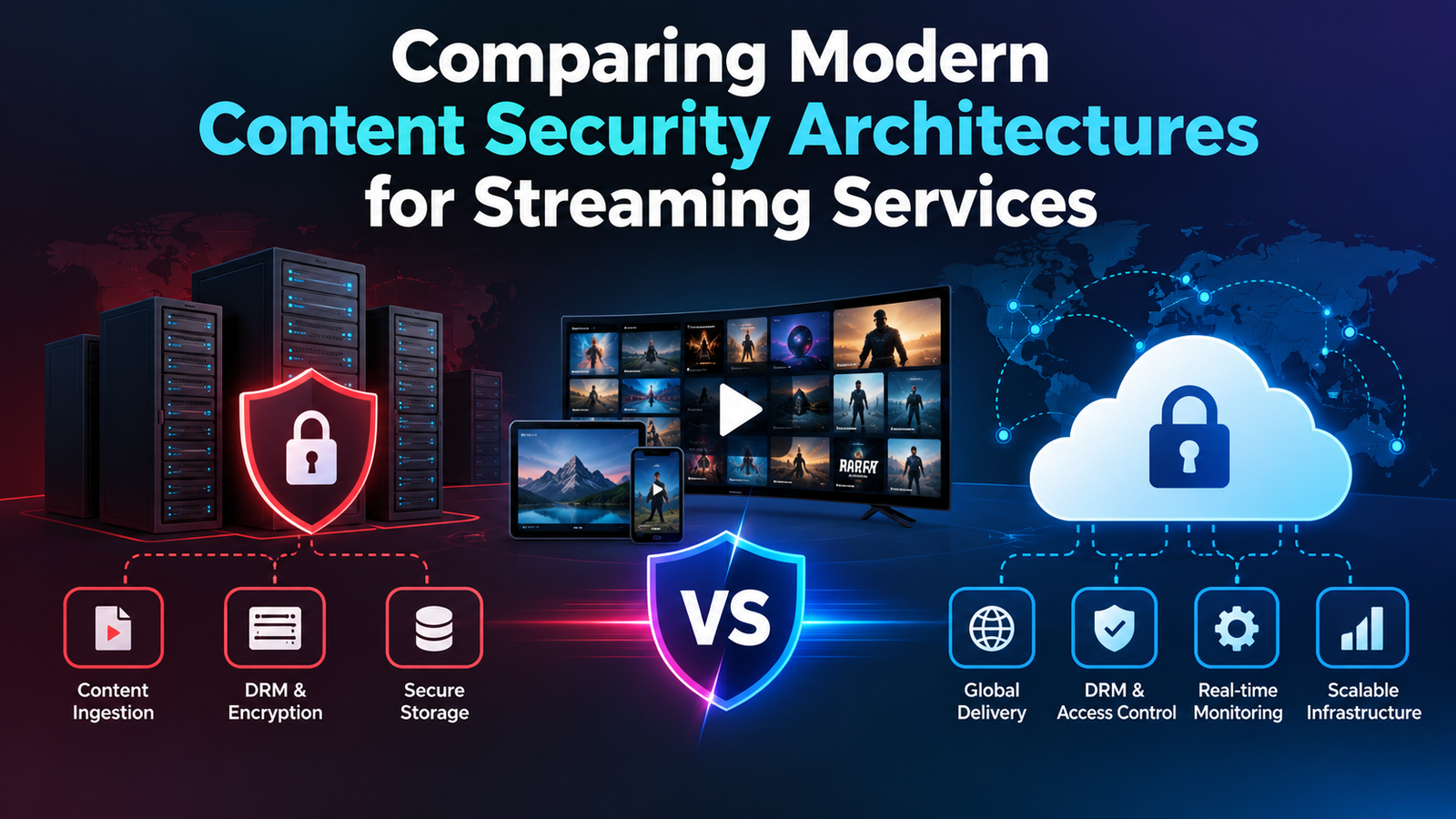
Selecting how to protect premium content isn’t a decision streaming platforms get to make once and forget. As piracy tactics evolve and viewing habits shift across devices, the architecture behind content protection has to evolve too. Anyone researching the Top 7 DRM Solutions available today will quickly notice that these aren’t interchangeable options competing on price alone.
Each represents a different architectural approach, with its own strengths, trade-offs, and ideal use cases. Understanding what separates them is the difference between choosing a system that quietly does its job and one that becomes a recurring source of playback complaints or security gaps.
1. Multi-DRM Systems
Rather than relying on a single DRM standard, multi-DRM systems support several major standards simultaneously, delivering the right license format depending on which device or browser a viewer is using. This approach has become the de facto standard for platforms serious about reaching audiences across smart TVs, browsers, and mobile apps, since no single DRM technology has universal device support on its own.
Best suited for: Platforms distributing content across a genuinely diverse device ecosystem.
2. Hardware-Backed DRM
Some systems tie content decryption to secure hardware components within a device, such as a trusted execution environment. This adds a meaningful layer of protection because decrypted content never fully exists in a space accessible to the device’s general operating system, making extraction significantly harder for anyone attempting to pull content directly from memory.
Best suited for: High-value premium content, such as early theatrical window releases, where the cost of a breach is especially high and justifies the added hardware dependency.
3. Software-Based DRM
Software-based implementations handle decryption and key management entirely within application code, without relying on specialized hardware components. This makes them more universally deployable, particularly on older devices or budget hardware that lacks dedicated secure hardware, though it typically requires stronger software-level hardening and obfuscation to compensate for the absence of that extra protective layer.
Best suited for: Platforms needing broad compatibility across lower-end or legacy devices still actively used by a meaningful share of subscribers.
4. Forensic Watermarking Integration
Watermarking isn’t DRM in the traditional sense, but it’s increasingly bundled into modern content security architectures. Invisible, viewer-specific markers get embedded into content during playback, allowing pirated copies to be traced back to the exact session, device, or account where the leak originated, even when the underlying video itself has been altered, compressed, or re-encoded before redistribution.
Best suited for: Pre-release screenings, press copies, and distribution scenarios where identifying a leak’s exact source matters as much as preventing it outright.
5. Session-Based Licensing
Rather than issuing long-lived licenses, session-based systems generate short, time-limited licenses tied to a single active viewing session. This significantly limits the window during which a stolen or leaked license could actually be exploited, since it expires shortly after the session ends, regardless of whether the underlying credentials or device were compromised during that playback window.
Best suited for: Live events and time-sensitive premium content, where limiting the useful lifespan of any compromised credential matters most.
6. Adaptive Bitrate Protection
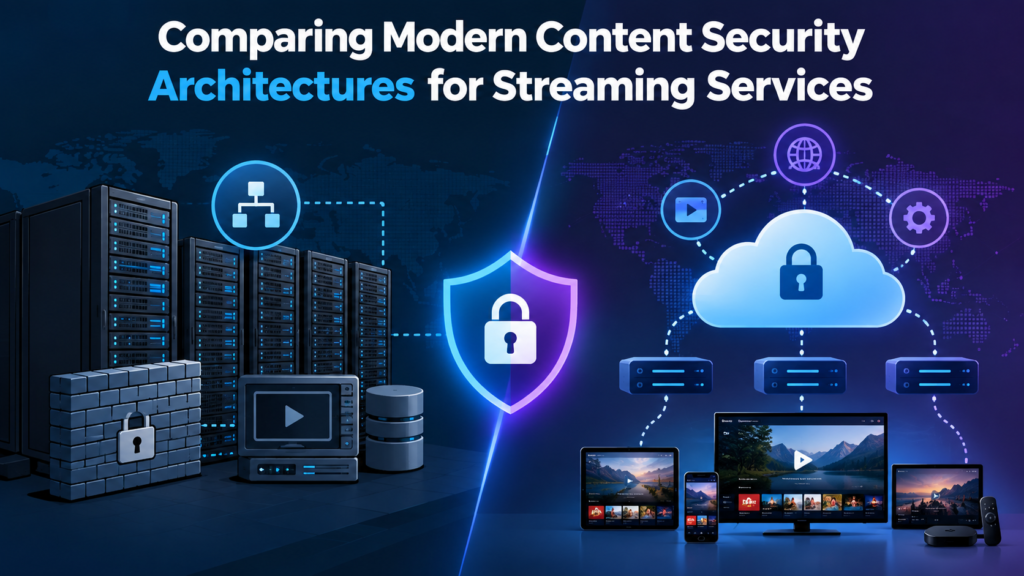
As streaming content gets delivered through adaptive bitrate formats, each quality level and segment needs to be secured individually rather than treated as a single protected file. Architectures built around this reality ensure protection doesn’t weaken simply because a viewer’s connection drops to a lower resolution tier during playback, closing a gap that’s easy to overlook in simpler security setups.
Best suited for: Platforms serving large, geographically diverse audiences with highly variable and often unpredictable connection quality.
7. End-to-End Encrypted Delivery Pipelines
This approach secures content at every stage of its journey, from the original source file through encoding, storage, and final delivery to the viewer’s device, rather than only encrypting it at the point of playback. It closes gaps that can otherwise exist earlier in the content supply chain, long before a viewer ever presses play, protecting the asset throughout production as well.
Best suited for: Platforms handling sensitive, high-value content where protecting the asset during production and storage matters just as much as protecting it during streaming.
Select The Right Combination
Effective content security rarely depends on a single technology. Platforms typically combine multiple controls based on their distribution model and risk profile:
- Multi-DRM protection: Controls access to encrypted content across different devices, operating systems, and playback environments.
- Forensic watermarking: Helps identify the source of leaked or redistributed content and supports post-incident investigation.
- Session-based licensing: Applies access rules to individual playback sessions, helping limit misuse of credentials or licences.
- Secure delivery pipelines: Protect content throughout transmission, reducing exposure between content preparation, distribution, and playback.
- Risk-based design: The right combination depends on content value, audience device diversity, distribution channels, and the potential impact of unauthorised access.
Layering these controls creates multiple defensive barriers instead of relying on one security mechanism.
Bottom Line
Conclusion
There is no single DRM architecture that suits every streaming platform. The appropriate approach depends on content value, device diversity, distribution methods, and the level of risk a platform is prepared to manage at different stages. Rather than placing the entire security burden on one technology, platforms can build layered protection that combines encryption, rights management, authentication, watermarking, secure delivery, and continuous monitoring. This approach allows individual controls to address different vulnerabilities while creating stronger overall resilience.
Evaluating how these technologies work together, where gaps may exist, and how protection needs change across devices can help platforms develop a security architecture that remains practical as their content ecosystem evolves. Doverunner works with streaming platforms to develop layered content security architectures tailored to their distribution environments and security requirements. Its approach brings together complementary protection measures to address risks across applications, devices, playback sessions, and delivery workflows, helping platforms establish consistent safeguards without relying on a single security technology.
You may also read