
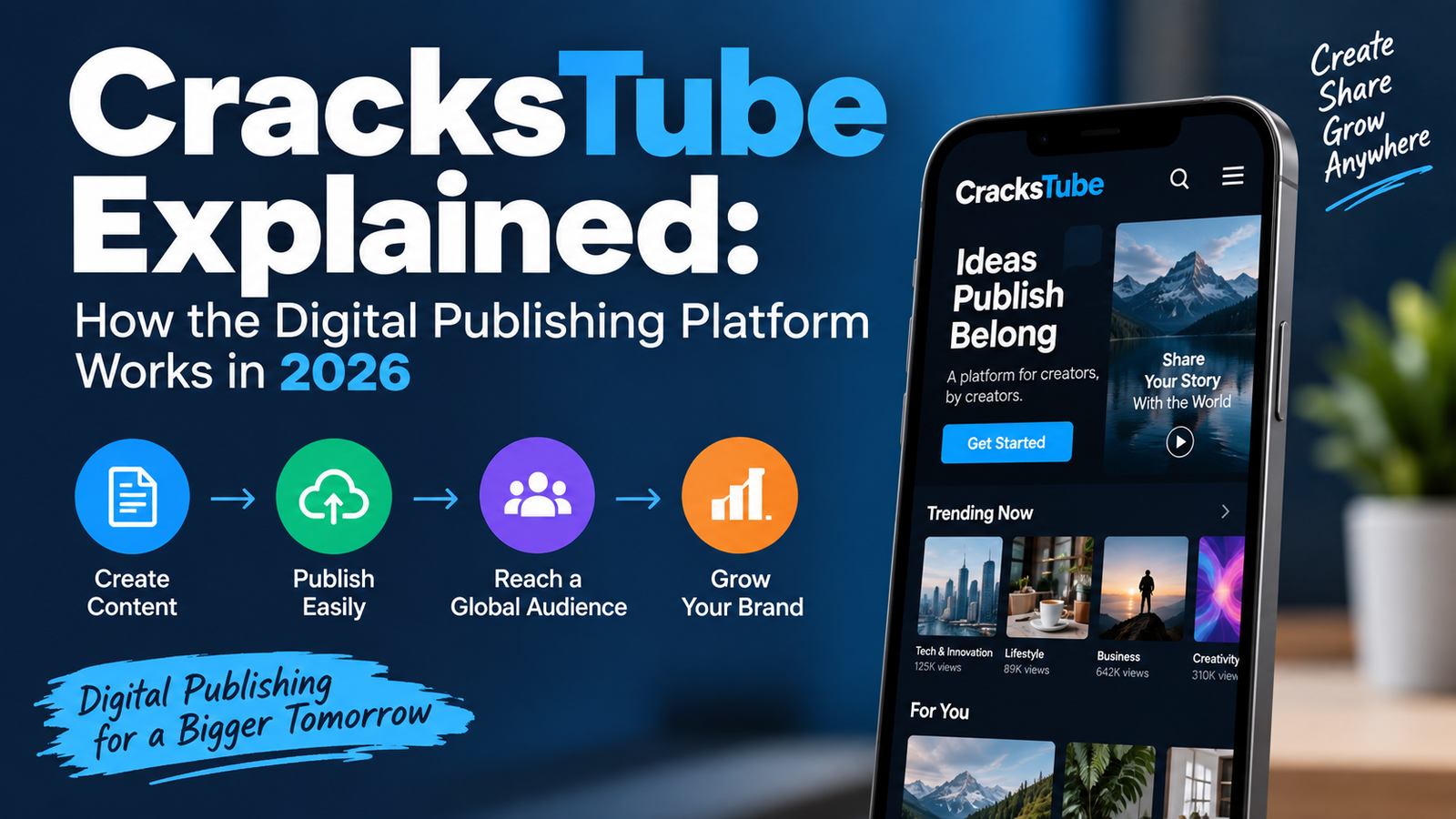
CracksTube is a name currently associated with online publishing and informational websites, but the term can be confusing because search results do not always refer to the same service. In 2026, one prominent use of the name is an article-based digital publishing model covering topics such as technology, business, finance, healthcare, education, home improvement, and professional services.
For readers, the basic idea is simple: visit the platform, choose a topic, and read published articles. For contributors and brands, the model may include guest-posting opportunities and editorial review. However, anyone researching CracksTube should pay attention to the exact domain they are visiting because similarly named websites can have very different purposes.
What Is CracksTube?
In its digital-publishing context, CracksTube is best described as a multi-topic online publication rather than a traditional video-streaming platform.
Current CracksTube-related publishing sites describe a model based primarily on written informational content. Articles may address technology, business, finance, professional services, home décor, healthcare, education, lifestyle subjects, and other areas.
This broad approach means CracksTube is not necessarily designed for one narrow group of readers. Someone may discover an article through Google while researching a technology question, while another reader may arrive looking for business or home-related information.
The publishing model also provides opportunities for outside contributors. Depending on the particular website, authors, marketers, businesses, and industry specialists may be able to submit articles for consideration.
An important distinction is necessary, however. CracksTube or Crackstube is not a universally consistent name across the web. Current search results include multiple domains and competing descriptions of what the term represents. Users should therefore identify a platform by its exact domain rather than assuming every site using a similar name belongs to the same company.
How Does the CracksTube Publishing Model Work?
The publishing model resembles that used by many multi-category blogs and contributor-driven websites.
A typical process involves several stages.
1. Topics Are Organised Into Categories
Instead of concentrating exclusively on one subject, a multi-category publishing platform separates content into different sections.
Current descriptions of CracksTube-style publishing sites mention areas such as:
- Technology
- Business
- Finance
- Healthcare
- Education
- Professional services
- Home and décor
- Lifestyle and general informational topics
This structure allows readers to browse related articles rather than moving through an unrelated stream of posts.
2. Articles Are Created or Submitted
Content may come from a site’s own writers or outside contributors.
Guest publishing is particularly relevant to the CracksTube model described by several current sources. Writers, businesses, marketers, or subject specialists may submit original material for editorial consideration. Some platforms using the name also reference paid guest-posting or placement services.
That distinction matters to readers. A contributor article may still contain useful information, but readers should understand who produced it and whether a commercial relationship influenced its publication.
3. Content Goes Through Editorial Review
A responsible publishing workflow does more than upload every submitted article automatically.
Editors may review material for relevance, readability, formatting, originality, and whether it fits the publication’s categories. The depth of this review can vary considerably between websites.
For readers, visible author information, clear editorial policies, corrections, sourcing, and transparent disclosures are stronger trust signals than claims that a platform simply publishes “high-quality” content.
4. Approved Articles Are Published
Once accepted, an article becomes part of the site’s publicly accessible content library.
Published pages can then be discovered through search engines, internal categories, links from other articles, or direct visits.
This approach gives contributors a way to reach readers without having to build an entire publication themselves.
Who Is CracksTube Designed For?
The publishing concept can serve several different audiences.
Readers are the most obvious group. They use the platform to find explanations, guides, industry information, and articles answering specific questions.
Writers and specialists may use contributor platforms to demonstrate knowledge and reach audiences beyond their own websites.
Businesses and brands can use legitimate guest publishing to share expertise, increase brand visibility, and attract relevant referral traffic.
Digital marketers and SEO professionals may also be interested because contributor articles can contain contextual references or backlinks. Several current descriptions of CracksTube-style platforms specifically mention guest posting and backlink opportunities.
However, backlinks should not be viewed as guaranteed search-ranking shortcuts. Google’s spam policies specifically address link schemes and links created primarily to manipulate rankings. A sustainable publishing strategy therefore needs useful content and appropriate link practices rather than mass placement solely for SEO.
Why Is the Name CracksTube Confusing?
This is perhaps the most important point for someone searching the keyword.
Words such as “crack” are commonly associated online with modified software, while “tube” is strongly associated with video websites. As a result, a person encountering CracksTube for the first time might reasonably assume it is a download or streaming platform.
Current search results make the situation more complicated because different websites use the term in different ways. Some describe a legitimate article-publishing model, while others associate similarly named sites with unofficial software or streaming services.
Therefore, it is more accurate to ask:
Which CracksTube website am I looking at?
rather than:
Is every website called CracksTube the same platform?
They should not automatically be treated as the same operation.
What Content Can Readers Expect?
On a multi-category publishing version of CracksTube, readers can expect primarily informational written articles.
Technology coverage might include explanations of digital tools, artificial intelligence, cybersecurity, software trends, or online services. Business sections can cover entrepreneurship, marketing, workplace topics, and professional services.
Other sections may focus on finance, home improvement, education, healthcare, food, or lifestyle subjects. The exact categories depend on the particular website.
A broad publishing strategy has advantages because one website can answer questions across numerous subjects.
It also creates a challenge.
Expertise in one category does not automatically establish expertise in another. Readers should therefore evaluate individual articles on their own merits, especially when the subject involves money, health, law, security, or another high-stakes decision.
CracksTube and Guest Posting
Guest posting is one of the more notable elements associated with the current publishing model.
In a normal guest-publishing workflow, an external writer proposes or submits an article. The publication evaluates it, requests revisions if necessary, and publishes it when it satisfies editorial requirements.
The arrangement can benefit both parties.
The publication receives additional content, while the contributor receives exposure to another audience. A relevant link may also help readers find further information about the author, organisation, research, product, or topic being discussed.
The important factor is editorial value.
A useful guest article should exist because it genuinely answers a reader’s question—not simply because someone wants to insert a backlink.
Transparency is equally important when money changes hands. Readers should be able to distinguish ordinary editorial coverage from advertising or sponsored material where applicable.
What Should Writers Check Before Publishing?
Anyone considering submitting content to CracksTube or another guest-posting website should investigate the platform before paying a fee or providing an article.
Check whether the site has a clear About page, contact information, submission requirements, privacy information, terms, and identifiable editorial practices.
Then examine recently published content.
Does it appear written to help readers? Are factual claims supported where necessary? Are authors identified? Are categories actively maintained? Does the website disclose sponsored relationships appropriately?
Writers should also understand exactly what they are buying if a placement is paid.
A publishing fee does not automatically guarantee meaningful traffic, search rankings, authority, or conversions. Those outcomes depend on numerous factors outside the publisher’s control.
Is CracksTube Safe to Use?
There is no responsible way to give one universal safety verdict for every website using this name because current search results show that CracksTube/Crackstube can refer to different domains and online projects.
Instead, evaluate the exact website you intend to visit.
For an article-based publishing site, check whether it provides clear ownership or contact information, HTTPS, transparent policies, normal navigation, and understandable editorial content.
Be much more cautious if a similarly named website suddenly asks you to download executable files, install unknown browser extensions, disable security software, enter unnecessary financial information, or follow suspicious redirects.
The name alone is not sufficient evidence of either safety or danger. The actual domain, its behaviour, its policies, and what it asks the visitor to do matter far more.
What Makes a Useful Digital Publishing Platform in 2026?
Digital publishing is increasingly competitive. Simply publishing large numbers of articles is not enough to create a valuable resource.
A useful platform needs content that satisfies real reader intent.
That means explaining subjects clearly, keeping important information updated, distinguishing fact from opinion, using reliable sources where appropriate, and avoiding misleading headlines.
Good organisation matters as well. Categories, descriptive headings, internal links, readable page layouts, and sensible navigation make large content libraries easier to explore.
Editorial transparency becomes particularly important when outside contributors are involved. Readers should have enough information to understand who created an article and why it was published.
These principles apply not only to CracksTube but to virtually any modern digital publication.
Benefits and Limitations of the CracksTube Model
A multi-category publishing platform can provide convenient access to many subjects from one website. It can also give independent writers and businesses another channel for distributing useful expertise.
For publishers, contributor programs can expand the range of topics they cover.
For writers, they can create opportunities to reach audiences beyond an existing blog or social account.
But the model also has limitations.
Editorial quality can vary between contributors and categories. Paid publishing can create conflicts if commercial relationships are not clearly disclosed. Broad-topic websites may also lack specialist expertise in certain fields.
For that reason, readers should avoid treating publication on any single platform as proof that every claim is correct.
The Future of CracksTube and Digital Publishing
In 2026, the bigger story surrounding CracksTube is not simply its name. It reflects a broader online publishing model in which independent publications combine editorial articles, external contributors, search discovery, and brand participation.
The platforms most likely to remain useful are those that prioritise reader value rather than publishing volume alone.
Clear authorship, meaningful editorial review, transparent commercial relationships, accurate information, and well-maintained articles are increasingly important differentiators.
CracksTube’s unusual name may continue to generate curiosity, but its usefulness as a publishing destination ultimately depends on something much simpler: whether individual articles genuinely help the people reading them.
Conclusion
CracksTube is currently associated with multi-category digital publishing, informational articles, and guest-contributor opportunities, but the name is also used inconsistently across the web. That makes the exact domain and its policies more important than the keyword itself.
For readers, the best approach is to evaluate each article for accuracy, sourcing, authorship, and relevance. For writers and brands, CracksTube-style publishing can provide another distribution channel, but editorial quality and transparent practices should come before backlink quantity. In short, understanding CracksTube in 2026 means looking beyond the unusual name and examining how the specific website actually operates.
You may also read